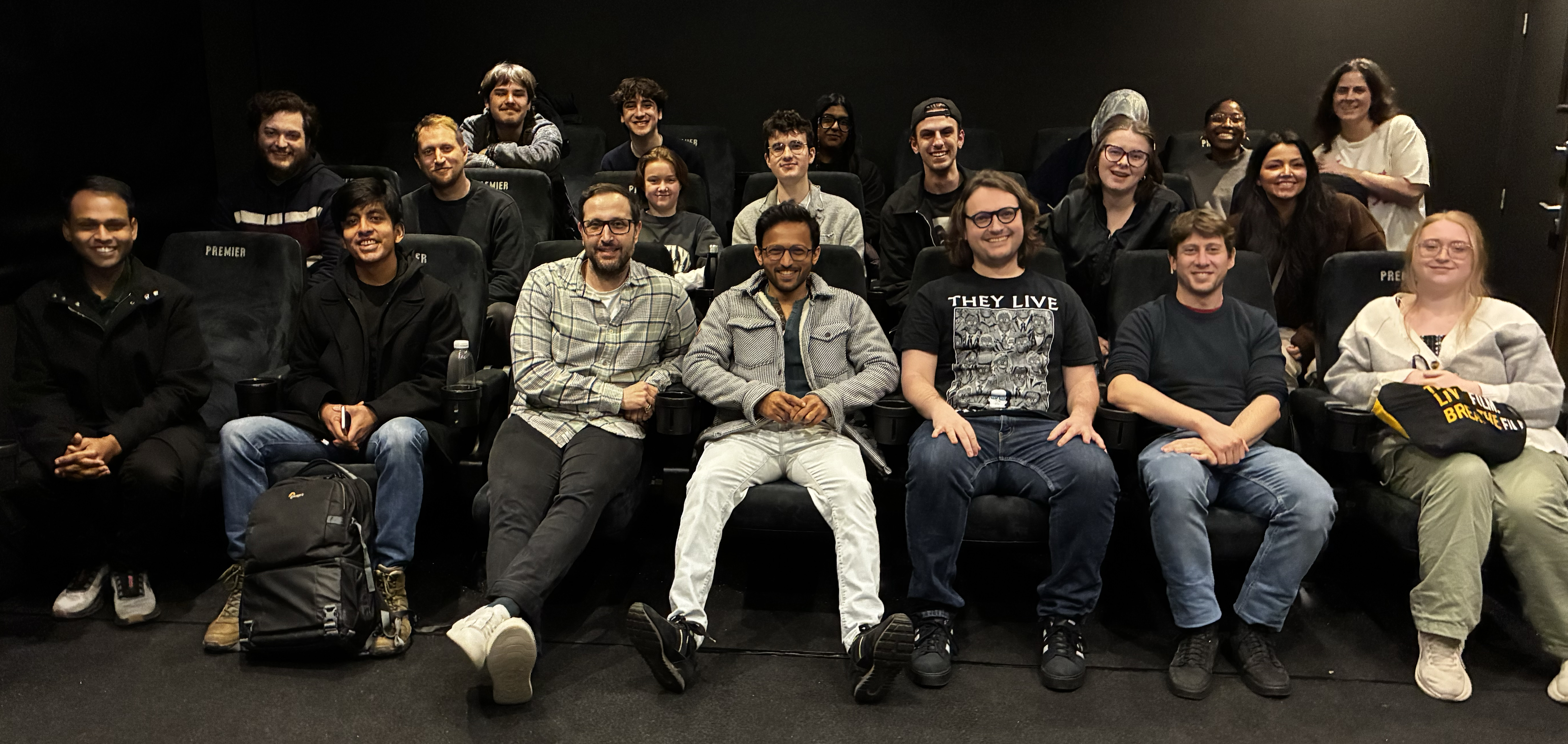
London Film Academy was delighted to welcome director Samuel Clemens and producer Agam Jain for a masterclass on indie horror filmmaking. Samuel and Agam’s horror feature, The Drowned (2023), was screened for LFA BA (Hons) Filmmaking, MA Filmmaking, and MA Screenwriting students alongside Alastair Train and Giovanni Compagnoni’s horror short Pearls (2025).
The Drowned follows a trio of art thieves as they hide out overnight in a seaside cottage. Their plans for an easy heist go awry when they encounter three mysterious women on the shores, who seem keenly interested in who they are and what they’re hiding.
The economic advantages of horror filmmaking
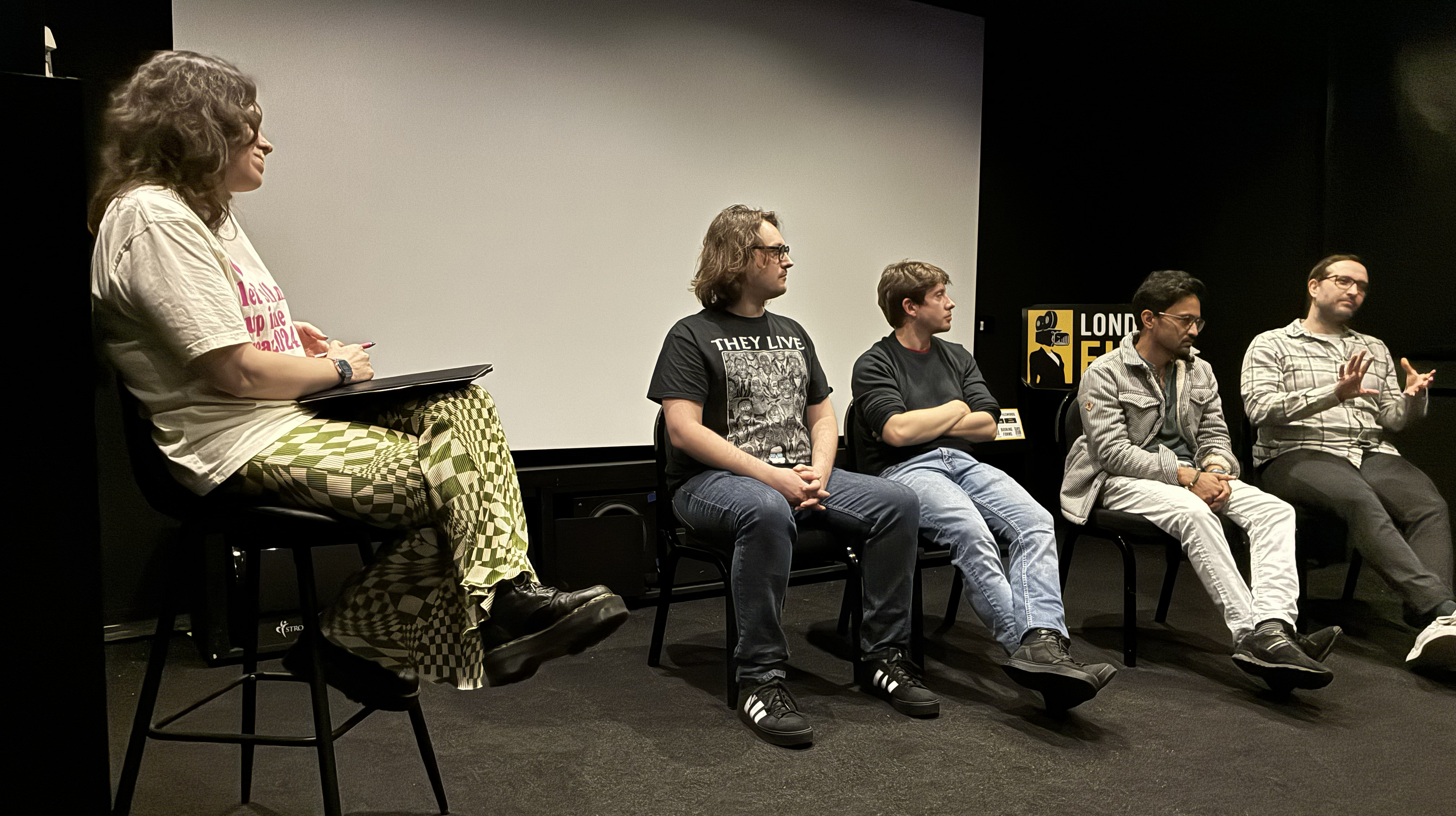
One of the key talking points from the Q&A between Samuel, Agam, LFA students, and moderator Nina Xyda was the appeal of the horror genre when you're starting out as a filmmaker. Horror inherently provides a narrative framework suitable to a “less is more” approach, allowing low-budget filmmakers the opportunity to find their footing in the industry.
Samuel aptly described this fact to LFA students, saying:
Bringing The Drowned to life
The Drowned came about while Samuel and Agam were beginning to develop a thriller set in France in 1939 and found that they needed to prove what they can bring to the screen with a smaller-scale feature film. Finding themselves with a three-month window on their hands, they quickly changed tack and set about assembling a crew, writing a script, and making the film happen.
Samuel shared his thought process throughout the frantic pre-production and production period on The Drowned:
Inspired by this determination to make a film, Samuel and Agam found the film’s striking seaside cottage through one of the film’s actors and immediately recced it and secured it, with Samuel then tailoring the script to the location.
Agam emphasised how invaluable it was for them to be nimble in terms of shooting location:
Blending in-camera and virtual filmmaking
Samuel and Agam were keen to utilise practical effects where possible, helping lend credibility to the film’s moments of violence, gore, and fantasy. But they also deployed some interesting virtual trickery to realise other aspects of the film, from the more thrilling visual moments to the mundane (yet equally important) details.
The film’s location proved popular among holidaymakers during the day, meaning unwanted set visitors had to be visually mapped out in post-production. With this in mind, Samuel and his crew worked to capture comprehensive 360-degree imagery of the cottage to weave in clean virtual shots with the real.
Agam explained this process:
The results are seamless, and it also meant that the film could benefit from well-lit, hyper-realistic imagery of the sea and the night sky that otherwise would have proven impossible to capture on their limited budget.
Having such a forensic knowledge of their shooting location helped Samuel and Agam to map out the film’s action and keep things fresh, where writing such a script otherwise might have felt spatially constricted.
Samuel elaborated:
After a successful festival run, including opening for the FrightFest Halloween Film Festival, The Drowned secured distribution from Vertigo Releasing and is available now on a variety of streaming platforms. We at LFA would like to thank Samuel and Agam for sharing their knowledge with our students and inspiring them to consider dipping their toes into indie horror filmmaking after completing their studies.